
The Best Activities to Try in the Okavango Delta

There are so many exciting activities to enjoy in the Okavango Delta beyond a traditional 4×4 game drive. Dive into safari specialist Catherine’s guide to the top things to do in this labyrinth of waterways, encompassing both water and land-based adventures.
Botswana’s Okavango Delta is a famously exceptional game-viewing region. And while 4×4 drives are a big part of any safari experience, there are many other ways of viewing this unique landscape, which bring you closer to the wildlife. Boat and mokoro excursions, walking safaris, and scenic helicopter flights all offer their own unique insights into the nuances of the Okavango Delta’s ecosystem. The activities below bring exhilaration and diversity to your safari experience, as you witness the wild from a completely different perspective!
Boat and Mokoro Excursions
Boat and mokoro excursions are a huge part of the quintessential Okavango Delta experience. With an average of 2.5 trillion litres of water flowing into the Delta each year, large parts of this incredible wilderness are inaccessible by vehicle, which is why boats and mokoros are such an essential part of what you do here. They also provide the magic. Nothing quite compares to gliding through these lush and vibrant waterways, surrounded by the sounds of the wild!
Excursions by motorboat are the easiest way to travel quickly and farther into the swamps and channels of the Delta. The emphasis while boating is often on the Delta’s rich and abundant birdlife. This is not to say that other wildlife is no longer a factor. Huge bull elephants are abundant in the waterways, while rarer species such as the elusive sitatunga are best seen in areas with plenty of water. Due to its impressive numbers of fish (tigerfish, tilapia, and various species of catfish), the Okavango Delta also offers wonderful opportunities for you to head out on a fishing trip. All fishing is on a catch-and-release basis, ensuring the continued conservation of the area.
The first thing you might ask about mokoro excursions is, “What is a mokoro?” Well, the humble mokoro has for generations been the primary mode of transport for the people who live in the Okavango Delta. A mokoro is simply a dugout canoe, which is propelled by pushing with a pole (called a nkashi) from the stern of the boat… much like punting! Mokoros were traditionally built from the single trunk of a large tree, but, with conservation in mind, nowadays they are increasingly made from fibreglass. Unlike motorboats, a mokoro outing is a very slow and quiet experience. Although the distances covered are comparatively small, being on a mokoro allows you to really drink in the serene beauty that surrounds you. It’s also a great mode of transport for avid birders, while smaller and more elusive species (like insects and the reed frog) are not scared off by the sound of motors. I definitely recommend trying a mokoro at least once on any trip to the Delta!
Best Camps for Boating
Some lodges offer year-round boating due to their proximity to deeper channels, while others come into their own seasonally as the floods arrive and specialise in water-based activities only.
Where to Stay Year-Round
-

Shinde Camp
From £374 – £926 ppShinde Camp is an authentically classic wilderness camp in a private northern Okavango Delta concession, owned and run by Ker & Downey Botswana. This company is notable for its standards of excellence and for providing superb safaris while conserving the…
-
Splash Camp
From £1,164 – £1,552 ppSplash Camp delivers family-friendly accommodation within the Okavango Delta’s stunning 175,000-hectare Kwara Private Concession, bordering Moremi Game Reserve. There’s a private space for exclusive-use groups, ideal for those travelling with young…
-
Little Vumbura
From £1,336 – £2,194 ppLocated within the Vumbura Concession, on an idyllically remote private island, Wilderness Little Vumbura is a delightful little camp in an area that attracts a diverse spectacle of wildlife. Nestled within 148,000 acres of pristine wilderness, the ancient…


Where to Stay Seasonally
-
Xugana Island Lodge
From £739 – £963 ppXugana Island Lodge is a well-established year-round lodge on a beautiful wooded island within the Okavango Delta’s private Shinde Concession. Occupying a spectacular site facing the permanent Xugana Lagoon, the property is owned and run by Desert & Delta…
-
Camp Okavango
From £739 – £963 ppCamp Okavango is a water-based camp in the Okavango Delta’s private and scenic Shinde Concession, known for its diverse ecosystems, including woodland, floodplains, and deep-water lagoons and channels. The camp is operated by Desert & Delta Safaris, who…


Walking Safaris
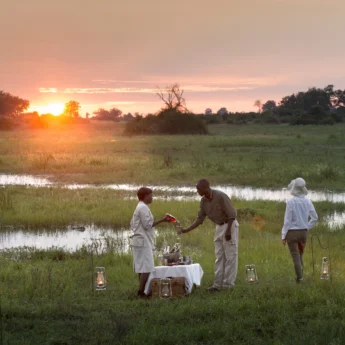
Walking safaris are a great way to stretch your legs while on your trip. On the whole, safaris involve quite a lot of sitting (in a vehicle, on a boat, in a mokoro) and equally a lot of fine dining – breakfast, lunch, afternoon tea, snacks at sundown, and dinner! This often leads to safari-goers wanting to be a little more active, which is where walks are perfect. Besides ensuring a bit of movement, walks are a wonderful way of seeing the Okavango Delta from an entirely different viewpoint. All walking safaris are guided by very experienced and armed trackers. And whereas the focus of game drives tends to be big game, a walking safari concentrates much more on the overall picture. Animal tracks, burrows, nests, and flora are just some of the things you’ll learn more about on a guided walk. It’s a way of seeing where you are in much greater detail. And as soon as you’re on foot, there’s certainly that thrill of realising that you’re in the wild!
Best Camps for Walking
Most camps in private concessions offer walking, although the distances can differ slightly. Usually, the aims of a walking safari at most lodges are to set off as dawn breaks and travel only a brief distance, enjoying the coolest part of the day. There are certain camps, like Kweene Trails, which take things a step further, allowing for multi-day walks and an adventure into the wilderness!
-
Karangoma
From £829 – £1,045 ppSet in the far northern reaches of the Okavango Delta, in pristine, wild terrain, Karangoma is a year-round camp centred on the collaboration between local elder Olatotse Sarefo and Wild Expeditions. Known for its authentic bushcamp experiences, Wild…
-
Footsteps Camp
From £769 – £993 ppThis excellent little Ker & Downey camp occupies a wonderfully remote setting away from the busier parts of the Okavango Delta. As the name suggests, the emphasis here is on walking, although the camp’s location supports a wide range of wet and dry safari…
-
Beagle Expeditions
From £1,037 – £1,037 ppBeagle Expeditions is a truly authentic and remote mobile camp owned and run by one of Botswana’s most recognised wildlife guides, Simon Byron. Accessible only by helicopter, the camp moves between two pristine wilderness locations along the Kweene River…
Helicopter Safaris
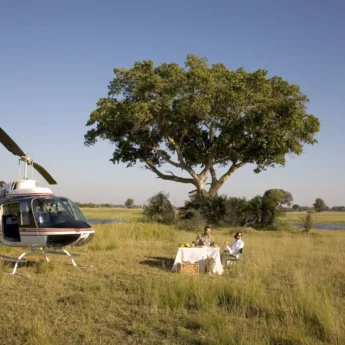
Motorboats, mokoros, and walking are arguably the three main activities besides game drives, but helicopter safaris are also an increasingly large part of how the Okavango Delta is explored. A scenic helicopter flight can also be booked in conjunction with a ‘conservation and coexistence’ experience, or a visit to the impressive Tsodilo Hills, a UNESCO World Heritage Site.
Even more so than by motorboat, helicopters allow passengers to voyage deep into the Delta, to areas rarely visited by other humans! Besides the incredible views of this watery wonderland, there is plenty of big game to be seen from the sky. Large herds of elephant and buffalo are particularly prevalent, but even the sight of a hippo under the surface of the Delta’s waters can be viewed from above. It’s also customary to set down for a picnic at an incredible location on your flight. Do chat with your safari consultant about where exactly you can travel from each camp.

Best Camps for Helicopter Safaris
To get an aerial view of the Delta brings into perspective the extraordinary geographical event that is the Okavango! Almost all lodges offer this since it’s outsourced and helicopters can land almost anywhere. You do need to book this in advance and at extra cost.
Where to Stay for a Helicopter Safari
Anywhere! It can depend on what you’d like to see on your flight. The northern Delta offers views of the water and flood itself as it comes into season. The southern Delta, or the north during a drier time of the year, will be better for spotting wildlife.
Horseback Safaris
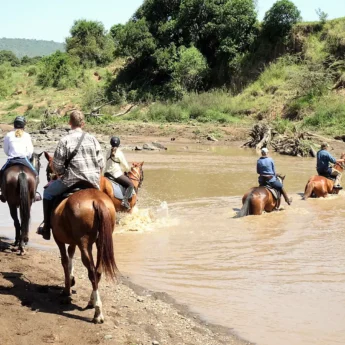
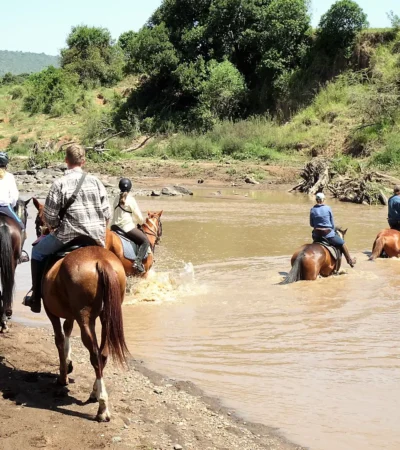
This is another unique way of game viewing. Being on horseback gives you the physical elevation of seeing things from a different viewpoint, and it’s also fascinating to experience how the wildlife reacts to horses. They are less skittish, and you can generally get closer to the action, with the horse acting as a go-between for you! The sense of belonging and immersion in nature when riding in the Delta is pretty special. Horses can also navigate through tough terrain, allowing you access to areas that vehicles sometimes cannot reach.
Please note that horse riding in the Okavango Delta does require a good level of competency on horseback. If you’re looking for horse-riding safaris for all levels or as a family then Kenya’s private reserves are the best destination for this.
Where to Stay for a Horseback Safari
African Horseback Safaris, operating out of Macatoo Camp, is the company we would recommend.