Okavango Delta Safaris
The Okavango is a wetland paradise of outstanding natural beauty. Home to some of the continents most famous camps the Delta is well respected as the finest game environment in Africa.
When to go to Okavango Delta
Best Time to Go
One of Africa’s most famous wildlife areas
Superb concentrations of big game
Annual floods bring the Delta to life
Home to Africa’s most famous camps
Africa’s Premier Safari Destination
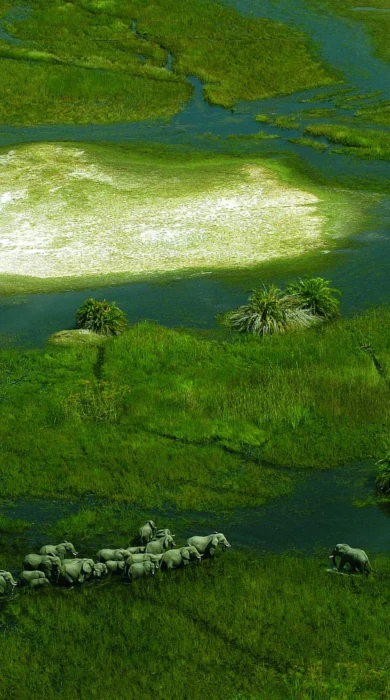
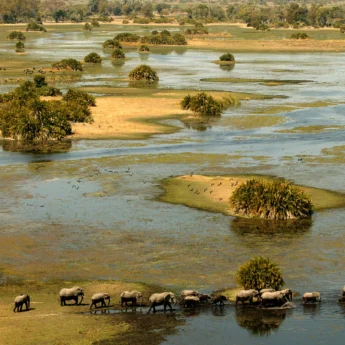
Home to Africa’s finest private parks, including the predator-rich Moremi Game Reserve, the Delta offers the widest diversity of safari activities, as well as the most exclusive safari experience on the continent. The Okavango’s flood waters come from the highlands in Angola, with the main deluge hitting the north-west of the Delta usually in April and transforming this dry landscape into a wetland paradise full of Africa’s Big Game.
The Okavango’s immense game volumes, as well as the region’s sheer beauty, make it easy to understand why the Delta is considered one of Africa’s top travel destinations.
The game really does move about! Game volumes in this region differ throughout the year, and accommodation that appeals to you may well be in the wrong area for the time of your trip. We recommend that clients book more than one Okavango camp. The Delta is vast and the habitat is varied – as a result, limiting your stay to only one Delta camp will restrict your overall experience.
Okavango Delta Trips


Activities & Wildlife
The variety of activities available in the Okavango Delta is one of the area’s biggest draws. The biodiversity, concentrations of wildlife, and land and water-based experiences make for thrilling days on safari!
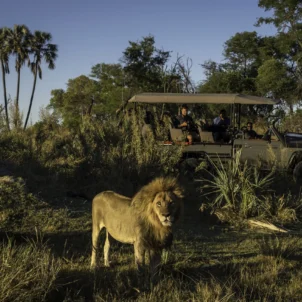
Day and night game drives
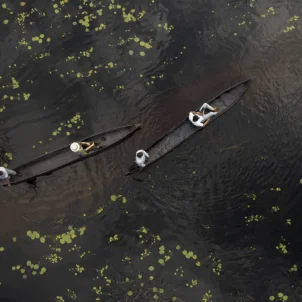
Mokoro safaris
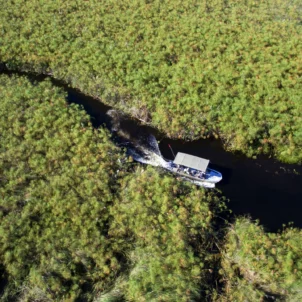
Motorised boat trips
Walking safaris
Scenic helicopter flights
Birdwatching
Fishing
-
Expertly guided game drives are available throughout the Okavango Delta, while night drives can be enjoyed in the Delta’s private concessions. Swathes of land are brought to life by the flood, and the game driving is exceptional. High on the list for daytime drives is Moremi Game Reserve, which has access to dry terrain amid a wealth of wildlife, particularly predators.
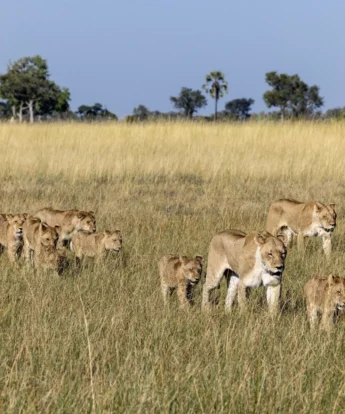
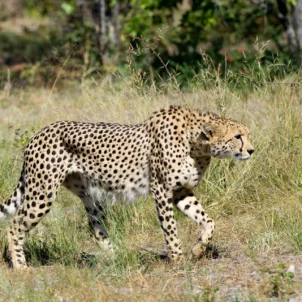
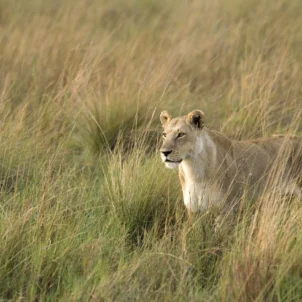
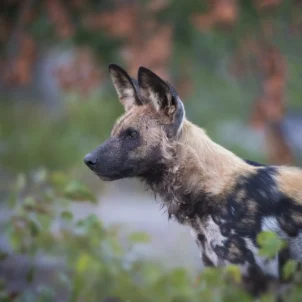
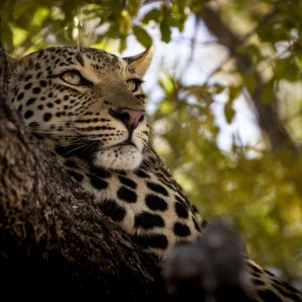
Buffalo, giraffe, zebra, and antelopes graze the savanna and floodplains, always wary of the cheetah, lion, leopard, spotted hyena, and wild dog that hunt them here. Day game drives take place in the early morning and again from late afternoon to avoid the hottest times of the day. In the private concessions, you can also enjoy night game drives, spotting nocturnal creatures like the bush baby, honey badger, and aardvark. You can sometimes see big cats with their kill, as they primarily hunt at night.

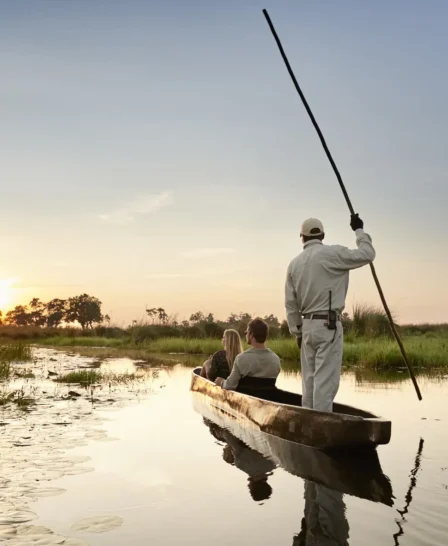
This is an immersive and silent way to explore the water-world of the Delta. Many smaller creatures can become frightened by boat engine noise and may be missed. But in this traditional dugout canoe, you get a chance to meet the Delta’s smaller residents. A ‘poler’ will steer you through the water, accessing the narrower channels, and pointing out insects, frogs, flora, and birdlife.
While mokoros used to be made from hardwood trees such as the sausage tree, today they are crafted from synthetic materials for conservation reasons. It’s truly memorable to experience the wildlife at water level, enjoying the wonderful sounds and calls – an often undervalued element to a safari! This is a tranquil and absorbing way to experience the Delta.
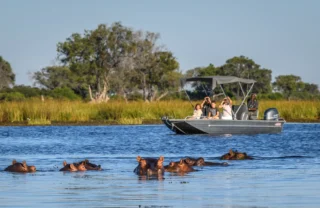
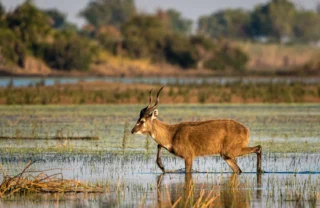
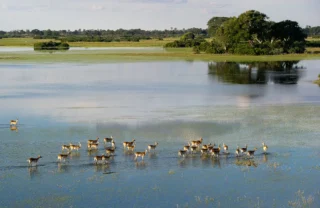
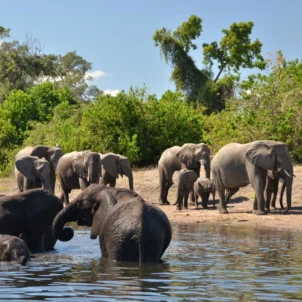
Getting out on the water in the Okavango Delta is unlike any other water activity in Africa. The immaculate conditions that are created when the floods take place are unique to the region. The Okavango is one of the planet’s few inland deltas, and it boasts genuinely impressive biodiversity. The waterways created by the annual floods draw in wildlife from afar. Crystal-clear waters are home to the aquatic antelopes (red lechwe and sitatunga), elephant herds wade past, and lots of hippos and crocodiles lurk in lily-covered lagoons.
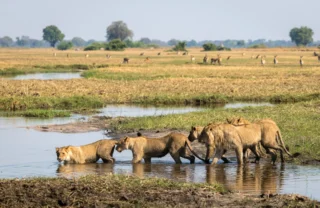
Land predators usually do not venture into the water, but lions are an exception to this and have adapted to swim between land masses. Many of the Delta’s tiny islands are in fact huge termite mounds.
Boating usually takes place in the morning or the late afternoon, with sundowners for the perfect sunset experience.
Most of the Okavango Delta is made up of private concessions where walking is permitted, so you’ll have exciting opportunities to set out on foot. Expertly trained guides will explain basic tracking while teaching you about the smaller creatures that get missed when you’re in a 4×4 vehicle. Flora, insects, birds, and dung can be fascinating, and sometimes you may come across larger animals. These can be thrilling encounters. All guides are armed for your protection and trained to safely approach, or not approach, the wildlife. Walking safaris can cater for all levels, including if you’d just like to see what’s happening very close to camp. There are also some exceptional companies that operate multi-day walking adventures – these truly get you back to nature!
This is a popular way to explore the Delta and marvel at the entirety of the annual flooding event. The aerial view is very impressive. You can see how things play out on a larger scale and watch the movement of herds below you. Flights need to be booked in advance and come at an extra cost.
The benefits of helicopter flights are that you can travel great distances, and see land formations you wouldn’t be able to see from the ground – the exact location where desert meets flood, for instance. You’ll visit inaccessible places, marvel at some ancient rock art, and touch down for a picnic in a beautiful spot. Most camps can arrange these flights, but do chat to your Botswana specialist as they can advise the best place for this activity.
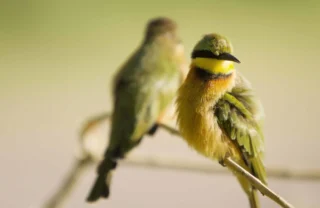
The Delta’s birdlife is magnificent and made up of more than 400 species, including the Pel’s fishing owl and the African fish eagle.
This is not an activity for everyone, although those who love to put a line in the water will be thrilled. Big catfish, bream, tigerfish, and African pike are commonplace, and all camps that offer fishing operate a catch-and-release policy.
Our Favourite Camps
-
Chitabe Camp
From AU$2,887 – AU$4,728 ppIn the forested southern reaches of Botswana’s Okavango Delta, Wilderness Chitabe is located within its own private concession, bordered by Moremi Game Reserve to the north, just across the Gomoti Channel. Though largely dry and forested, this is prime…
-
Karangoma
From AU$1,548 – AU$1,953 ppSet in the far northern reaches of the Okavango Delta, in pristine, wild terrain, Karangoma is a year-round camp centred on the collaboration between local elder Olatotse Sarefo and Wild Expeditions. Known for its authentic bushcamp experiences, Wild…
-
Shinde Camp
From AU$698 – AU$1,730 ppShinde Camp is an authentically classic wilderness camp in a private northern Okavango Delta concession, owned and run by Ker & Downey Botswana. This company is notable for its standards of excellence and for providing superb safaris while conserving the…
-
Mombo Camp
From AU$4,588 – AU$7,029 ppThere are few properties as prestigious as Wilderness Mombo. The crowning jewel of the Okavango Delta, it is consistently regarded as one of the finest camps in Africa, with accommodations and communal spaces that take luxury to new heights. Yet it’s the…
-
Vumbura Plains
From AU$3,194 – AU$5,509 ppIn the far north of Botswana’s vast, wildlife-dense Okavango Delta, Wilderness Vumbura Plains consists of two spacious camps on raised decks within the 60,000-hectare Vumbura Plains Private Wilderness Area. Surrounded by vast floodplains, pristine waterways,…
-
Sango Camp
From AU$809 – AU$1,116 ppSango Safari Camp is a small, good-value camp in the Khwai Concession, just outside the north-eastern boundaries of Moremi Game Reserve. Overlooking the beautiful Khwai river, this year-round water source allows the camp to offer both land and boating…
-
Splash Camp
From AU$2,176 – AU$2,901 ppSplash Camp delivers family-friendly accommodation within the Okavango Delta’s stunning 175,000-hectare Kwara Private Concession, bordering Moremi Game Reserve. There’s a private space for exclusive-use groups, ideal for those travelling with young…
-
Wilderness Qorokwe
From AU$2,385 – AU$4,100 ppA land-based camp bordering the iconic Moremi Game Reserve, Wilderness Qorokwe is spectacularly located between the Santantadibe and Gomoti channels in a predator stronghold where sightings of lion, cheetah, leopard, and African wild dog are frequent. With…
One of Africa’s most pristine wilderness areas, the Okavango Delta offers a uniquely beautiful game-viewing environment, incredible exclusivity, and diversity of experiences with land and water safaris available. I have had some of my most peaceful, private, and intimate sightings in the heart of the delta. It really is the ideal place to create lasting memories.Talk to someone who’s been there
Real expertise doesn’t come from a few trips to Africa. All our specialists have either been guides, run the camps, or grown up and lived in Africa. That’s over 600 years of genuine safari experience.Good to Know
01.How long should I spend in the Okavango Delta?
Ideally, you’d stay between three and six nights, splitting your time between ‘wet’ and ‘dry’ camps to give you a more complete safari experience. It is important to experience at least two camps whilst staying in the Okavango. There are some seriously good dry camps which offer a completely different experience to the wet camps. Combining the two different styles and safari activities will really make your trip.
02.What’s the difference between the Moremi Game Reserve and private reserves?
The Moremi Game Reserve is public land, which means certain rules apply within its borders. You cannot off-road drive here, or do walking or night safaris. The game viewing in Moremi is excellent, but there are more vehicles. Private reserves only have a couple of camps located in a vast area, allowing for a more exclusive safari experience.
03.When is the best time to travel to the Okavango Delta?
The Delta is a complex region as some areas are better to experience at specific times of the year. July through to October is Botswana’s winter and historically the finest time of year to be in the Okavango Delta. At the beginning of this period, migrational game moves from areas outside the Okavango, focusing on the flood water and good grazing to be found in the Delta proper. As a result, the game viewing is absolutely outstanding, comparable in quality to anywhere else in Africa in its peak game-viewing season. October then sees the highest temperatures and a noticeable rise in humidity before the first good rains break in November and December. As soon as these rains set in, the game migrates out of the Okavango to areas of better grazing – the Pans and Kalahari in particular.
The green season, which is from December to March, is when Botswana receives its rains for the year. They usually come in afternoon thunder showers, which last an hour or so and then disappear. You will find that some of the animals will migrate into the areas that offer better grazing, like the Kalahari Game Reserve and the Pans. This is a fantastic time of year to visit. The premium camps’ rates are reduced dramatically, so you can stay in some of the most luxurious properties at a fraction of the price. Game viewing-wise, it is much greener, and the bush will be thicker meaning you’ll need to select your region carefully.. Even though this is the rainy season, the Delta itself can be dry in areas and too shallow to do any water activities, so if you want to enjoy the full range of activities, we recommend staying along one of the deep water channels.
April and May see the floodwaters arriving in the Delta. This is what we like to call the Miracle season – there is nowhere in Africa more beautiful than the Delta in its first flood, as you see the vast Kalahari sands turning into a wetlands paradise with scatterings of waterlilies throughout the floodplains. The animals that have migrated in the green season will all start to return.
Speak to an Expert
Let one of our Yellow Zebra specialists design
your tailor‑made African adventureAs Seen In