
Nairobi Safari Holidays
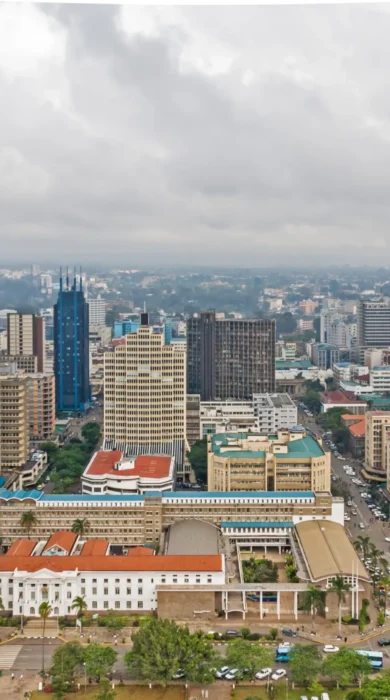
Nairobi is the capital city of Kenya, forming the country’s Nairobi County together with the surrounding region that includes villa suburbs sprawling for miles.
When to go to Nairobi
Best Time to Go
Visit Nairobi between July and October for the best experience.
Kenya’s Vibrant Capital
The city’s name derives from the Maasai word, meaning ‘cool water’, also the name of the river that flows through. Additionally, Nairobi is known as ‘Green City in the Sun’, as it has its own national park! Nairobi National Park, established in 1946, is in fact the only one of its kind to have a city location.
Nairobi Trips



Activities
Nairobi is the second largest city in the African Great Lakes Region, just behind Tanzania’s Dar es Salaam. If you’re tempted to venture in, you’ll find plenty to see and do!
Explore the City’s highlights
Visit Nairobi National Museum
-
We tend to book Nairobi as an overnight stay, but if you spend any length of time there, you’ll find a vibrant city with parks and gardens, swathes of shopping centres, fabulous food and drink, a bustling nightlife, plus many monuments and museums!

The Nairobi National Museum is Kenya’s national museum and boasts an extensive collection of artefacts, showcasing the fascinating development of the country over time.


History
The history of Nairobi begins in 1899. Three years earlier, British workers had begun to build a railroad linking Mombasa and Kisumu, Lake Victoria. The aim of this project was to open up East Africa for trade and colonial settlement. Just one year before the turn of the century, a supply depot and railroad camp were constructed in what at that time was nothing more than a swamp, inhabited by the Maasai and displaced Kikuyu people. Until then, the land had functioned only for agricultural use. However, the camp became the headquarters of the railway and soon many more buildings sprang up to accommodate increasing numbers of workers. A town was born!
Unfortunately, only shortly after this first expansion, plague hit. The town was burned to the ground, but from those ashes rose a hugely successful commercial centre, replacing Mombasa as British East Africa’s capital as early as 1905. Expansion continued apace, due to further colonialism, tourism, and hunting of big game. The British declared Nairobi a municipality in 1919.
Years of civil unrest followed, culminating in the Mau Mau Uprising between 1952 and 1960. In 1963, Nairobi achieved independence and was named as the capital of the Republic of Kenya. Subsequently the city grew again, functioning as host of the World Council of Churches’ fifth assembly in 1975.


Talk to someone who’s been there
Real expertise doesn’t come from a few trips to Africa. All our specialists have either been guides, run the camps, or grown up and lived in Africa. That’s over 600 years of genuine safari experience.







Speak to an Expert
Let one of our Yellow Zebra specialists design
your tailor‑made African adventure