
Rubondo Island National Park
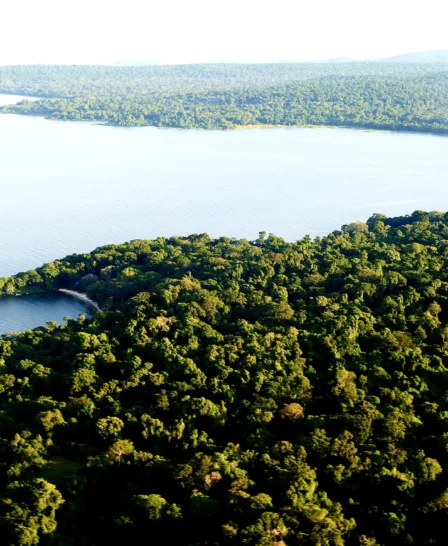
Situated in the south-west of Lake Victoria, Rubondo Island is a dream destination for travellers seeking an exciting variety of safari activities in a pristine national park!
Best Time to Go
The largest island National Park in Africa
Exciting variety of activities
Home to diverse wildlife species
An exclusive island experience

A Unique Island Safari
We recommend Rubondo Island National Park to travellers who are considering holidaying in Tanzania and are looking for something a little bit different from the country’s famous attractions. As it has just one camp, the island is able to offer very exclusive experiences. You won’t see the traditional Big Five species here, but there’s animal action enough to satisfy any wildlife enthusiast! And there’s the option of combining a stay here with time in Tanzania’s better-known safari areas.
Activities & Wildlife
Explore Rubondo Island to experience the fascinating wildlife and unique safari activities.
Chimpanzee Habituation Programme
Wildlife
Rubondo Island forest walks
Boating safaris
-
Among Bernhard Grzimek’s wildlife introductions from 1966 to 1969 were 16 chimpanzees, all rescued from zoos and circuses throughout Europe. The chimps embraced their new freedom, and have been happily breeding since their release among the vines and trees. It’s thought that there are about thirty chimps in residence today, and a chimpanzee habituation programme was launched in 2013. Chimp treks are available for travellers aged 15 years and over. Encounters cannot be guaranteed, due to their numbers relative to the size of the island, but every trek provides exciting opportunities to see lots of other wildlife.

Other species introduced on Rubondo comprise elephant, giraffe, black rhino, black-and-white colobus monkey, roan and suni antelopes, and 37 grey parrots that had been traded illegally. Unfortunately, the rhinos were poached to extinction, and, for unknown reasons, the roan antelopes failed to thrive. But there’s plenty of indigenous wildlife to see here as well as the newcomers, such as bushbuck, sitatunga, civet, genet, spot-necked otter, hippopotamus, Nile crocodile, serrated hinged terrapin, an amazing range of butterflies, and over 300 types of bird, including marabou stork, pied kingfisher, and impressive concentrations of fish eagles!
Forest walks can consist of anything from an hour-long stroll to a multi-day excursion, and the latter can include staying in a well-equipped treehouse or in a lakeside fly camp!
Boat trips are possible too, and catch-and-release fishing can be enjoyed from a boat, from the shores of Lake Victoria, or from Rubondo Island Camp’s site.
History
Rubondo was populated by a fishing community until 1965, when 400 islanders were resettled on the mainland and other islets, and their former home was named a game reserve. During the next four years, Professor Bernhard Grzimek (of Yellow Zebra fame!) set to introducing a wealth of wildlife to the island. Rubondo achieved national park status in 1977. Today it is entirely uninhabited by humankind.
Talk to someone who’s been there
Real expertise doesn’t come from a few trips to Africa. All our specialists have either been guides, run the camps, or grown up and lived in Africa. That’s over 600 years of genuine safari experience.Good to Know
01.What type of travellers is Rubondo Island good for?
Rubondo Island Camp is our preferred accommodation in Rubondo Island National Park. The camp includes a family cottage and a suite for honeymooners, making it suitable for most types of travellers. For more information, please take a look at our description of the camp and by all means contact a member of our safari travel experts to discuss holidaying on this idyllic island!
02.When is the best time to travel to Rubndo Island National Park?
The best time to visit Rubondo Island National Park is between June and September, during the dry season. This is generally a more comfortable time to visit weather-wise, however, the green season has its rewards, not least the increase in bird numbers due to the influx of migrant species! Birding is at its best from December to February.
Speak to an Expert
Let one of our Yellow Zebra specialists design
your tailor‑made African adventureAs Seen In