
Yellow Zebra’s Favourite Photographic Hides in Africa

A photographic hide gives you the unique opportunity to view wildlife, unbeknownst to the animals, at an angle you don’t get from bumping around in a vehicle or trying to approach on foot.
When you mention the word ‘safari’, everyone instantly thinks about being out and about either on foot or in a vehicle exploring a reserve or park. However, a different way to view wildlife, whether or not you’re an avid photographer, is just sitting in a hide near a source of water, watching whatever wildlife comes down to drink.
There is nothing better than spending your time on safari relaxing, while staying hidden from the wildlife and viewing passers-by from a unique angle. I am a keen photographer, a complete novice, but the privilege of going on many safaris has allowed me to explore other interests. As a result, I love a camp with a hide, as it supplies me with a completely different angle from which to view and capture wildlife. It also allows me to play around with my camera settings and improve my photography skills.
Outside the usual activity times on safari, there’s a lot of time for sitting back and enjoying your surroundings – and what better way to pass the time than watching what comes and goes? Inspired by my new-found enjoyment of photography, this blog discusses some of the best hides in Africa for watching and taking photos of the local wildlife.
By no means are these the only hides out there – they’re just a few of Yellow Zebra’s favourites.

Shenton Safaris
First to mention is Shenton Safaris in Zambia – this company boasts some of the best hides in Africa, with each one offering a slightly different perspective or angle. Shenton’s have a number of hides that cater to a range of interests, but it’s worth noting that some hides are camp specific and some are seasonal. For example, the Hippo Hide is exclusive to Kaingo Camp guests. This hide is located on a deep corner of the confluence of the Mwamba and Luangwa rivers, where hippos congregate throughout the season. As the dry season heightens, so does the action at the Hippo Hide – and a ‘lower-level’ hide is installed to give you that eye-level angle.
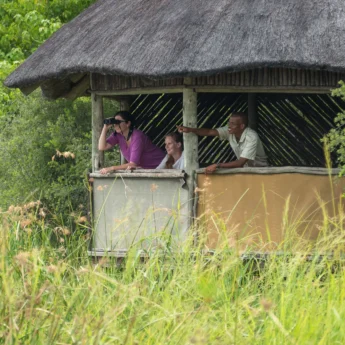
There’s also the Elephant Hide, again exclusive to Kaingo Camp guests. This overlooks the Luangwa River from a raised platform resembling a treehouse. The platform overlooks a historical elephant crossing point and is best visited after brunch or around teatime. This hide doubles up as a star-bed at night for those looking for a more adventurous night out under the African sky!

Exclusive to Mwamba Camp guests, a third hide is located just metres from the camp itself and sits directly over an active waterhole. Although it’s busy with wildlife and birds throughout the season, this hide really comes into its prime come late August when water is scarce. As the season goes on, it is not uncommon for guests to forego their game drives in favour of observing all the activity going on at the waterhole at Mwamba Camp!
Last, but not least, are Shenton’s mobile hides which are seasonal – the Wild Dog Lagoon Hide and the Carmine Bee-eater Hide. These two hides can be accessed from both camps. The Wild Dog Lagoon Hide is located on the edge of the lagoon that’s a popular area for wild dog sightings and is typically set up at the start of the season (May/June time). However, while it is a known hangout for the dogs, it’s more famous for its incredible plains game and bird viewing. This is perfect for the twitchers amongst us or anyone looking to sharpen their skills when it comes to birding photography – whether that be the definition of birds or birds in flight.
The Bee-eater Hide gets put in place once the southern carmine bee-eaters have established their nesting sites along the banks of the South Luangwa. These migratory birds usually start arriving in August, but as their arrival is a little unpredictable, the presence of the hide is only guaranteed in September and October. Access to the hide also varies from year to year, so be prepared to cross a shallow portion of the Luangwa River to reach it!

The Hide Safari Camp
This hide is possibly one of my favourites, as Zimbabwe is home to me, and it’s where my love for safari began. As its namesake, the camp’s hide is very much part of its tradition. The original hide is disguised as a termite mound and it overlooks a waterhole, allowing you to enjoy watching wildlife completely unbeknown to the resident predators and herbivores. You do have to visit this hide with your guide, and the wildlife can be a little farther away depending on the water levels. A second and underground hide gives guests the flexibility to head off independently to enjoy it from camp. This hide sits right on the edge of the waterhole, allowing you to get incredibly close up to the daily visitors to the waterhole, both big and small.
Wilderness Linkwasha, Zimbabwe
Another to keep up our sleeves is Wilderness Linkwasha in Hwange National Park, Zimbabwe. Positioned right in front of camp at one of the most prolific waterholes in the concession, the Linkwasha Hide offers slightly more comfort than other hides. Not only is there a bar fridge, but you can easily take a bottle of bubbly and some snacks into the hide with you.
King’s Pool
Located about 10 minutes from camp, the hide at King’s Pool in Botswana is a sunken shelter that sits on the edge of a waterhole. This gives guests an eye-level view of the wildlife coming down to drink. Best visited during the dry season, from late July onwards, the hide is a popular spot during siesta time –for elephants in particular.
Wilderness Mokete, Botswana
Located in an area of the concession affectionately known as ‘Elephant Paradise’, this hide becomes particularly active towards the end of the dry season, where hundreds of elephants, thousands of buffaloes, various antelopes, and an array of birdlife descend on the remaining water. It is about 10–15 minutes of driving away from camp, which feels remote and wild, but, in typical Wilderness fashion, it is comfortable and perfectly positioned. A challenge with Wilderness Mokete is that it is not a camp for everyone. The wildlife experience fluctuates quite drastically depending on the season, and at times the interactions can be quite jarring for more sensitive safari-goers.
Ol Donyo
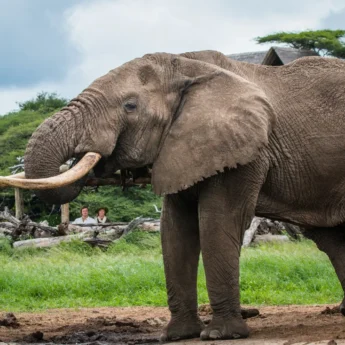
More of a log pile than a hide, nevertheless this is one of the best places for watching the iconic big tusker elephants that frequent a waterhole. Located just below Ol Donyo Lodge, this hide is much loved by everyone, and it’s where some of the most iconic images of the big tusker elephants have originated. Part of a natural migratory route in Kenya between Amboseli and Tsavo National Parks, the waterhole sees many of the most famous tuskers come for a drink. You can either sit down here outside activity time or substitute your game drive for a relaxing afternoon in camp and enjoy watching whatever comes down to the hide. Another option is to enjoy lunch while watching the regular visitors to the waterhole.
Andersson’s Camp at Ongava
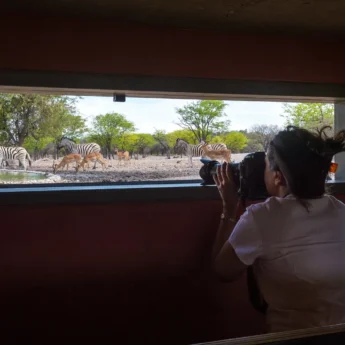
The photographic hide at Andersson’s Camp in Namibia is connected by a walkway to the main area of the camp, allowing guests the freedom to go back and forth between the camp and the hide. This hide sits overlooking a productive waterhole often frequented by plains game, but it also provides a great opportunity to catch lion and rhino up close! Positioned at water level, the hide gives guests some unique photographic opportunities, and it’s also terrific for travellers who just like to sit and watch from a different perspective.

Dinaka
Located on the northern fringes of the Central Kalahari Game Reserve, within an exclusive private conservancy, Dinaka offers striking arid landscapes and an exceptional wilderness experience. There are two sunken hides, each with space for up to six people, positioned at eye level in close proximity to waterholes. The wildlife photography opportunities are particularly rewarding during the dry season, when wildlife congregates around the scarce water sources.
Related Content



Speak to an Expert
Let one of our Yellow Zebra specialists design
your tailor‑made African adventure