
Ngorongoro Crater Safaris, Tanzania
The Ngorongoro Crater holds Africa’s Big Five in the continent’s most dramatic setting. Fantastic cats, as well as elephants and a population of rhino.
When to go to The Ngorongoro Crater
Best Time to Go
World’s largest intact volcanic caldera
Fantastic cats, huge tuskers & black rhino
One of the most beautiful safari settings
One of Tanzania’s safari hotspots
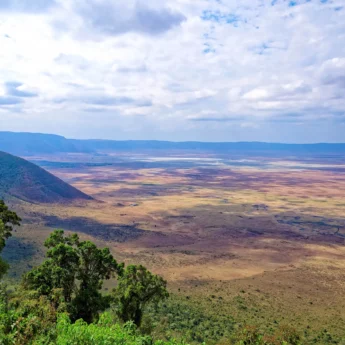
A Unique African Natural Wonder
Located in northern Tanzania, the Ngorongoro Crater is one of Africa’s most famous parks. Two to three million years ago, this ancient volcano, supposedly as high as Kilimanjaro, imploded, leaving the world’s largest intact caldera, complete with 600m-high walls. Over the years, the fertility of the volcanic soil and year-round water supply has attracted one of the highest concentrations of game in Africa. Today, Ngorongoro is a truly stunning site and has some of the best wildlife of anywhere we operate safaris. Where else can you go on safari in an extinct volcano packed with the Big Five?
The Ngorongoro Crater Trips


Activities & Wildlife
This ancient caldera makes for a truly unique safari setting, where the Big Five can be seen on the crater floor. The sensational views from the crater rim also make this a ‘must see’ for any north Tanzania safari.
Game drives
Wildlife
Birdlife
Cultural visits
-
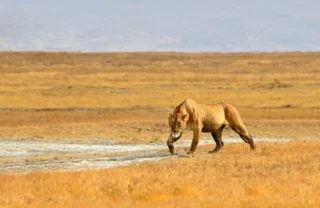
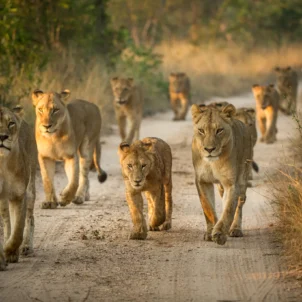
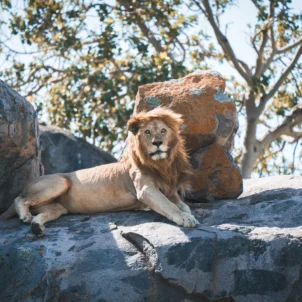
Unlike most other parks, activities within the crater are limited to game driving and you can’t leave the vehicle. However, the broader Ngorongoro Conservation Area offers plenty of other things to do once you’ve started your day with a game drive across the crater floor. The crater is quite small and vehicles must remain on the roads, so it does get fairly busy – especially since lions love to languish on the roads in front of you, creating some congestion!
The crater serves as an excellent introduction to safari, before you enter the Serengeti for the main event. The key to good crater drives can also depend on which lodge you decide to stay at, as some have better access or private access, meaning you beat the crowds to arrive early.

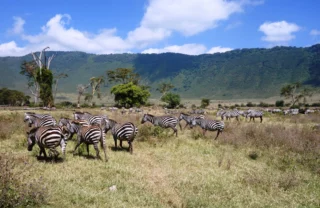
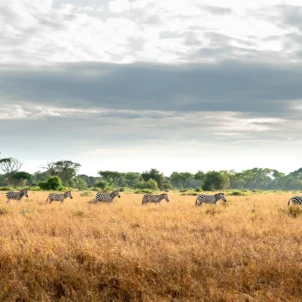
With its soda lake and acacia woodland, the crater is well able to support a wealth of wildlife. For good reason, it is known as ‘the garden of Eden’ and ‘the cradle of life’. Cats that roam the crater floor include prides of lion, leopard, serval, caracal, and sometimes cheetah. The crater is also home to black rhino, wildebeest, zebra, Grant’s and Thomson’s gazelles, eland, topi, spotted hyena, hartebeest, jackal, black-faced vervet, baboon, and warthog.
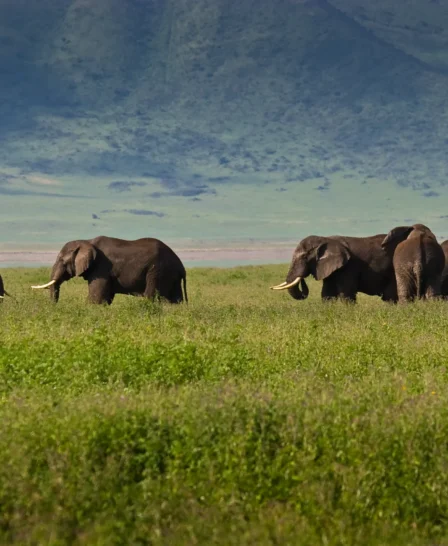
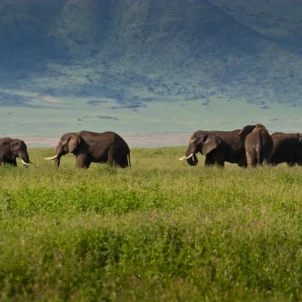
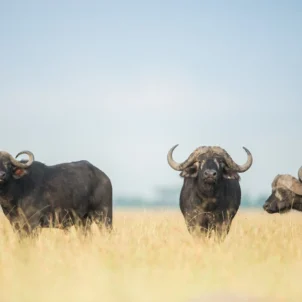
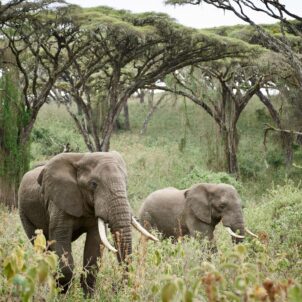
The lake and its tributaries attract hippopotamus, waterbuck, and many other species, while the higher regions are populated by mountain reedbuck, Cape buffalo, and elephant. The elephant numbers are not overwhelming, but some of the oldest and largest tuskers have taken up residency here.
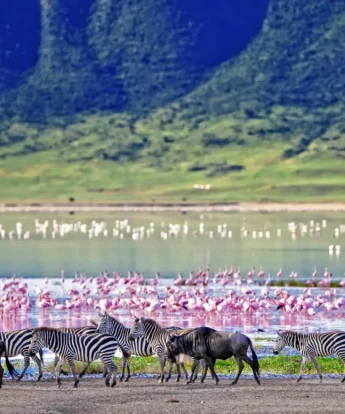
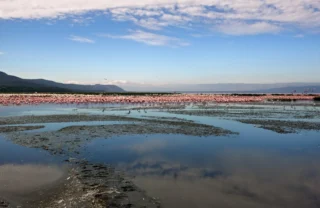
The birdlife is excellent in the crater, with over 200 species for avid birdwatchers! A particularly spectacular sight is the congregation of vast numbers of common and dwarf flamingo in the Crater’s soda lake, feasting upon crustaceans and algae. The area has many raptors, such as marsh harrier, augur buzzard, black kite, tawny eagle, and white-backed vulture. Other feathered beauties include the avocet, hoopoe, black-bellied bustard, cattle egret, ostrich, fan-tailed widow-bird, grey-rumped swallow, little grebe, red-billed firefinch, speckled pigeon, and wattled starling. Due to the restrictions and not being able to go ‘off-road’, binoculars are a must.
As a game drive in the Ngorongoro Crater involves a relatively small space, it is usual to do only one drive there. This leaves plenty of time for the region’s other activities. A cultural visit to a local community is high on that list. You can visit a Maasai village and meet the locals, learning about how they live, their diet, and their history. It’s a fascinating experience. Depending on where you are staying, some visits can be more authentic than others.
The accommodations off the crater rim (in nearby Karatu, especially) can offer a significantly wider diversity of activities. Here, lodges have access to the village of Mto wa Mbu, where Maasai villages are open for visits, walking areas are endless, and there is a real buzz of tribal life.History
In 1959, the Conservation Area, including the Ngorongoro Crater, received protection under the Ngorongoro Conservation Area Ordinance. The site was allocated for multiple use and wildlife roamed the floor adjacent to the livestock of the semi-nomadic Maasai farmers. To this day, protection continues under the Ordinance, with the Ngorongoro Conservation Area Authority in charge of wildlife conservation. Its concerns include measures to prevent poaching, monitoring of invasive species, management of tourism and infrastructure control.
The Ngorongoro Crater is only a part of a much larger ecosystem – the Ngorongoro Conservation Area. The Crater is obviously the major attraction, but the Conservation Area is also home to off-the-beaten-track areas such as Empakai Crater (a smaller and water-filled Ngorongoro) and the forests that lead towards the active volcano of Oldoinyo Lengai (see our Lake Natron page for more info on this remarkable area). These remote areas are without doubt among Tanzania’s hidden gems.
The Ngorongoro Crater is arguably the most unique safari location in Africa. Here, you can spot the Big Five with the dramatic crater wall as a background. The crater offers a fantastic year-round safari experience, but it does get busy in the popular winter months. By staying on the crater rim, you can, however, be among the first to descend into the crater for the day!Talk to someone who’s been there
Real expertise doesn’t come from a few trips to Africa. All our specialists have either been guides, run the camps, or grown up and lived in Africa. That’s over 600 years of genuine safari experience.Good to Know
01.Can I see the Big Five in Ngorongoro Crater?
The Ngorongoro Crater is one of the best places in Africa to see the Big Five (buffalo, lion, leopard, elephant and rhino). With approximately 70 lion, huge buffalo herds, 40 rhino and some of the largest tusker elephants left in Africa today, the only somewhat tricky Big Five sighting is leopard. As elusive as ever, nevertheless leopards can be found in the Lerai Forest and even seen openly on the Crater rim. As the Crater has 600m-high walls on all sides, it has created its own self-contained ecosystem. The vast majority of animals live in the Ngorongoro throughout the year, choosing not to migrate but to rely on the Crater’s remarkably fertile grazing grounds and water supply. As a result, game viewing is reliably brilliant throughout the year.
02.How busy is the Ngorongoro Crater?
The Ngorongoro Crater is no zoo, but it can be VERY busy. As with so many of the planet’s exceptional destinations, you will not be the only person visiting Ngorongoro! There is no denying the fact that the Ngorongoro’s safari is not as authentic as elsewhere – there are simply too many visitors – but consider the fact that all the animals are there of their own free will, and that you are on safari in an extinct volcano! Nowhere else in Africa can say the same – this is an amazing safari destination.
03.What is the best time of day for an Ngorongoro Crater safari?
Be clever with the time of day that you visit Ngorongoro. If you can be first on the Crater floor, the experience is quite simply out of this world – but be 30 minutes late and it can be a nightmare. We would advise any traveller to try to be on the floor first. Commit to getting up early so that you really are there first! Alternatively, relax and go in later than everyone else.
04.When is the best time of year to see wildlife in the Ngorongoro Crater?
As the animals here do not leave the Crater floor, you can have outstanding game drives at any time of year! However, the park can become busy, which has an adverse effect on the quality of game viewing on offer. July, August. December and February are the busiest months. The best value time to visit the Crater is in November, April and May when the standard low season rates apply.
05.What are the best accommodation options?
While there are no properties in the crater itself, you can stay on the Crater rim, where you’ll enjoy incredible views and early access to the crater floor for game drives. For great-value options, we recommend staying in boutique properties in the surrounding highlands.
Speak to an Expert
Let one of our Yellow Zebra specialists design
your tailor‑made African adventureAs Seen In