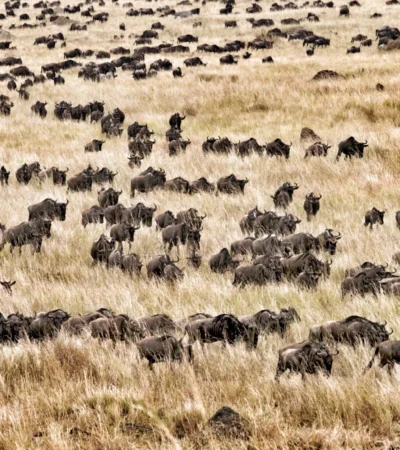
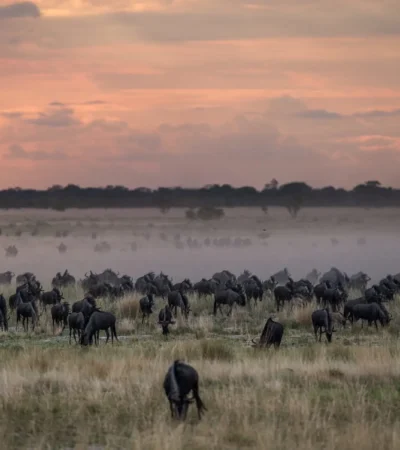
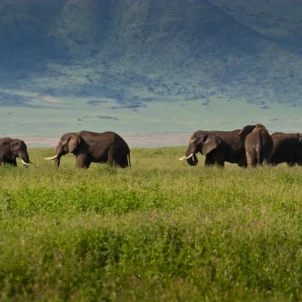
Each year, safari-goers flock to the game-rich plains of the Serengeti-Mara ecosystem for one of the greatest wildlife spectacles on earth. But what is the Great Migration exactly?
Explore the Great Migration: A Month-by-Month Guide
The Great Migration is a year-round wildlife phenomenon that sees vast numbers of wildebeest make one of the most perilous journeys on earth. We’re often asked, “Where are the migration herds throughout the year?” Our expert guides map their movements month by month.
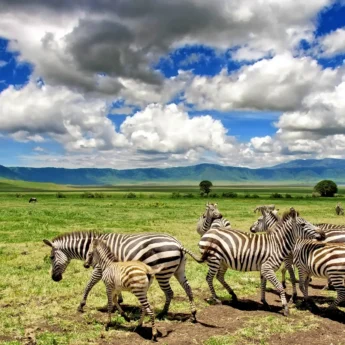
Between January and March, the wildebeest calving season is underway, and large herds congregate to graze on nutrient-rich grasses in the southern Serengeti and northern Ngorongoro Conservation Area. Hundreds of thousands of young are born within a matter of weeks, attracting dynamic predator action.
From April to July, the Great Migration shifts northward, moving from the southern plains into the central Serengeti and western corridor. May – July is also the rutting season. As July progresses, the herds reach the northern Serengeti, marking the critical period of their first major river crossings.
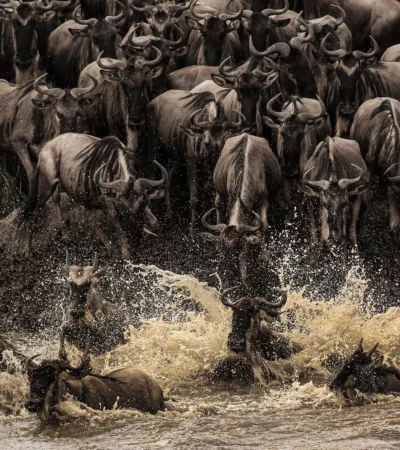
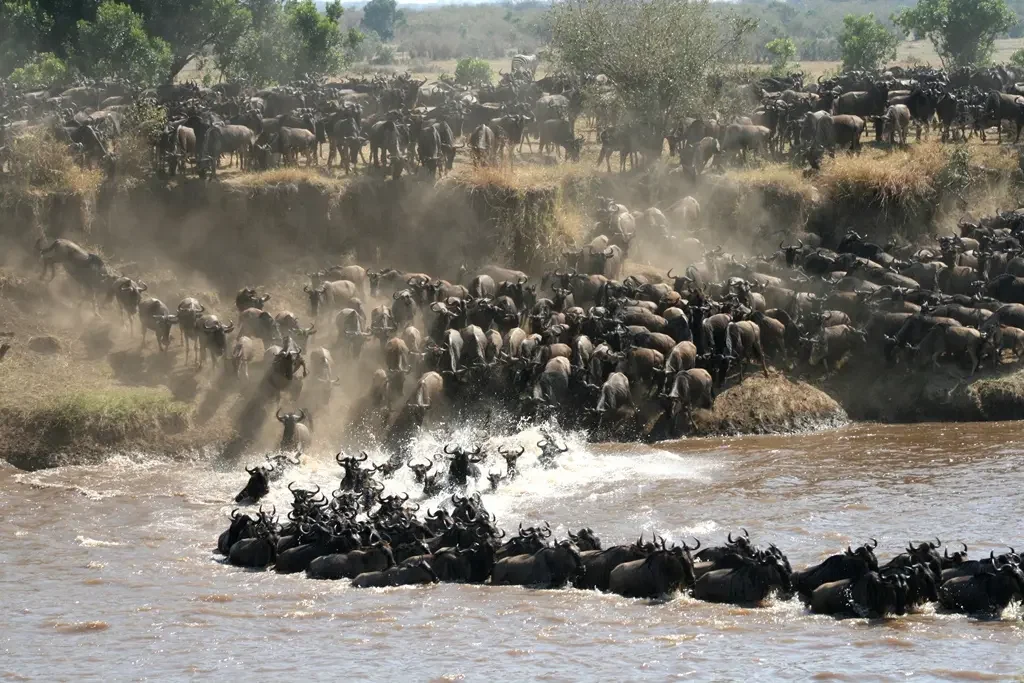
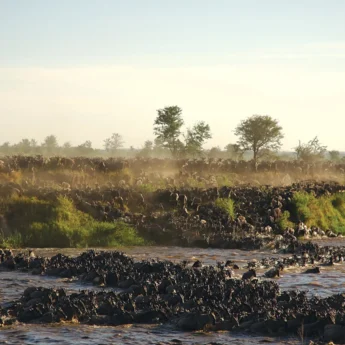
In late July, August, September, and October, the Great Migration’s megaherds face their greatest challenge yet: the treacherous, crocodile-filled Mara River. These are prime months for river crossings, characterised by some of the most intense predator-prey interactions and wildlife spectacles.
November and December complete the migration cycle. After the rains, herds return to the southern Serengeti’s fresh, short-grass plains and northern Ngorongoro Conservation Area, where they settle to graze, preparing for the upcoming calving season.
With something new to see each month, we’re often asked, “What are the key phases of the Great Migration?” While the journey is constant, our specialists break it down into four distinct stages. Understanding these phases is crucial for planning a bespoke trip that perfectly matches what you’d like to experience on safari.
If you’re wondering, “How can I book a safari to see the migration?”, the Yellow Zebra team will guide you at every step. Our bespoke itineraries place you in prime viewing locations, ensuring exceptional sightings throughout the year.
Sorry, your search didn’t return any results. Adjust your search or contact our expert team to create a custom safari that’s personalized to you.
FAQs
01.
What is the best month to see the Great Migration river crossings?
For intense river crossing action, the period to focus on is between mid-July and October. During these months, wildebeest herds face the formidable Grumeti and Mara rivers in the northern Serengeti and Masai Mara, which present the most significant challenges of their migration journey.
02.
Should I choose Kenya or Tanzania for a Great Migration safari?
The best location to view the Great Migration varies depending on the season. In Tanzania’s Serengeti, the herds are present for a large part of the year, including the calving season between January and March. For dramatic river crossings, opt for late July to October when the migration is concentrated in Kenya’s Maasai Mara. For more exclusive crossings, travel to the Lamai Wedge in the northern Serengeti in the first week of August.
03.
How can I guarantee I will see a wildebeest river crossing?
As with all wildlife sightings, river crossings are unpredictable and cannot be guaranteed. To maximise your chances, travel during the peak season, from July to October, and spend several days at a camp near a major crossing point. Our expert team will help you choose the right accommodation and time of year.
04.
How much does a migration safari cost?
A Great Migration safari is a premium experience, with prices reaching their highest during peak seasons. Costs are driven by the level of luxury, the choice between mobile or permanent camp, the time of year, and the trip duration. Due to exceptionally high demand, a migration safari typically requires a larger budget than a standard safari, with prices beginning roughly around £3,400 / $4,500 per person sharing.
05.
How far in advance do I need to book a safari for the Great Migration peak season?
To secure your Great Migration safari during the peak season (July to October), we recommend booking at least 12 to 18 months ahead. The top lodges and camps fill up fast due to their prime locations and intimate size. For off-peak travel, consider booking 6 to 12 months in advance. In general, we recommend booking a Great Migration safari as far in advance as possible to ensure your first choice of accommodation and experiences.
Speak to an Expert
Let one of our Yellow Zebra specialists design
your tailor‑made African adventure