Savute Safaris
Savute, or Savuti, is one of four distinct areas within Botswana’s beautiful Chobe National Park. Commonly known as Savute Marsh, it is found in the west of the park and occupies over 10,000 square kilometers!
When to go to Savute
Best Time to Go
One of four areas within Chobe National Park
Green season zebra migration
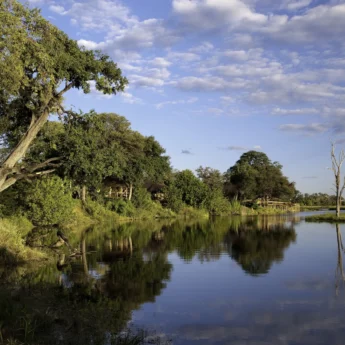
A marshy part of Chobe with varying water supply
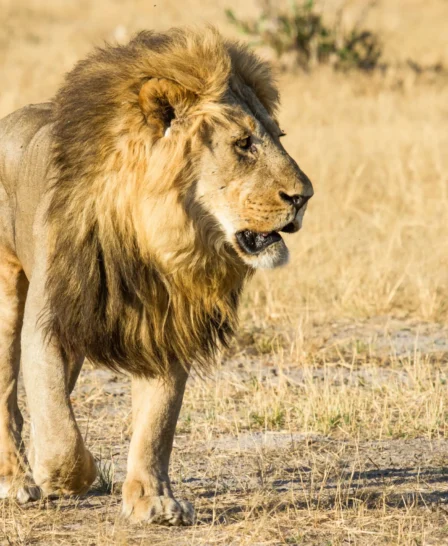
Impressive concentration of wildlife
A Wildlife-Rich Corner of Chobe
The Savute Marsh area of Chobe once contained a very large lake. Many years ago, plate movements beneath this lake caused its main supply of water to be cut off, but it continued to be fed by the Savute Channel. The Savute Channel flows seemingly at random, alternating between flowing freely and drying up. Geologists explain that this too is because of plate movements. In January 2010, the channel started flowing again before the area’s water level dropped once more – and the channel now runs dry in its fossil form. The hundreds of dead trees lining the channel’s banks are a reminder that it has experienced much drier times. For example, it was dry from 1880 until 1957 – and further movement beneath the Earth’s surface might well bring about another drought in future years.
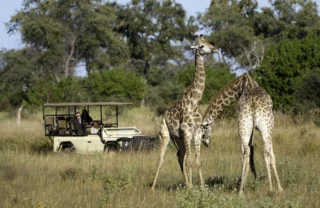
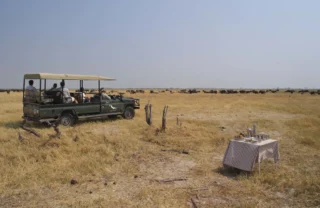
Today, camelthorn sandveld sprawls either side of the channel. The much larger surrounding area ranges from dense mopane woodland to wide savanna, providing great grazing for herbivores such as elephant, buffalo, wildebeest, giraffe, zebra, tsessebe, and kudu. Excitingly, the green season witnesses the migration of hundreds of zebra from northern Botswana! This is a somewhat unpredictable but truly spectacular sight.
Activities & Wildlife
A region in the south-west of Chobe, Savute is famous for its high predator encounters, zebra migration, and the mysterious Savute Channel – the river that flows both ways!
The Savute Channel
Game drives and birdwatching
Ancient rock art
-
This arid wilderness sits in direct contrast to Chobe Riverfront, making it an excellent second safari location. Wide savanna, acacia forests, and the craggy Gubatsa Hills provide an interesting collection of landscapes. And then there is the Savute Channel, the region’s main water source, flowing from the Linyanti. However, it dries up for much of the year, and tectonic activity makes it do odd things. Even from the dead trees that line the edge of the channel, it’s clear that something strange is going on here! When there is water in the channel, gentle seismic activity makes the waters appear to be flowing in both directions. It’s an extraordinary quirk of nature.

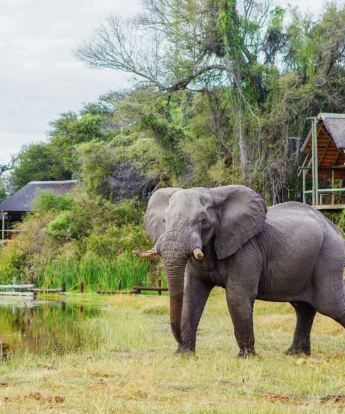
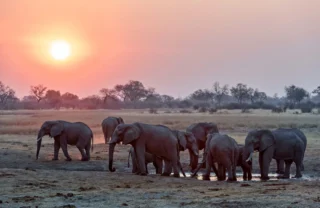
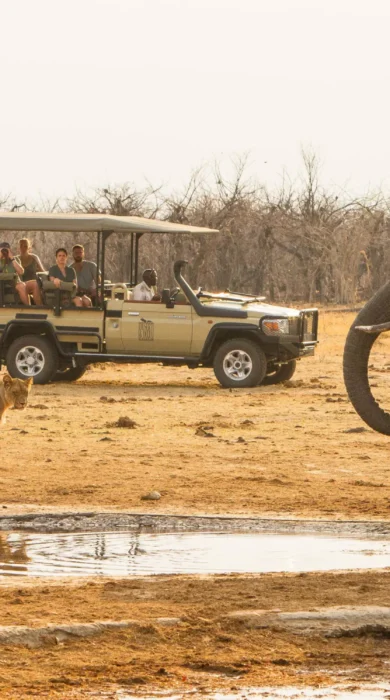
Savute is one of the most atmospheric regions of Botswana. The 90-metre high outcrop of the Gubatsa Hills, the Mabade compression (a now dry, ancient super-lake), and the famous Savute Channel make for wonderful terrain. Game drives are the primary activity, due to Savute’s being part of Chobe National Park. There are massively high numbers of elephants here, with Chobe witnessing the arrival of more than 120,000 in the dry season.
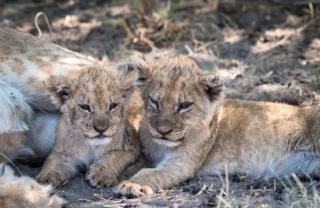
Savute is known for its lion prides, which have learned to hunt elephant, often found in the open marshes. Dereck and Beverly Joubert’s filming of the amazing duels between lion and buffalo in the Savute region helped increase the area’s tourism, but the impressive lion pride shown in the films has since disbanded. Nevertheless, the area retains outstanding concentrations of herbivores that attract plenty of big cats – lion, leopard, and cheetah. Interestingly, this area is also well known for the fishing leopards that hunt around here, and have been featured in several documentaries. You can also expect to see other predators such as hyena and wild dog.
There are over 450 bird species too, including the secretary bird, the kori bustard, the red-billed francolin, and, in April, vast flocks of quelea finch.
At some of the area’s camps and lodges, guests are invited to visit ancient San rock paintings at Gubatsa Hills, a small outcrop that forms a striking feature within the flat landscape.
Talk to someone who’s been there
Real expertise doesn’t come from a few trips to Africa. All our specialists have either been guides, run the camps, or grown up and lived in Africa. That’s over 600 years of genuine safari experience.Speak to an Expert
Let one of our Yellow Zebra specialists design
your tailor‑made African adventureAs Seen In