
Makgadikgadi Salt Pans Safaris
The Makgadikgadi Salt Pans are the remains of a huge super-lake that covered much of this part of Africa many years ago. Today, all that is left are two huge salt pans – the Sua and the Ntwetwe.
When to go to The Pans
Best Time to Go
The remains of a huge super-lake
Superb contrast to the Waterways Further North

A huge range of exciting activities
Meeting the meerkats
A Unique, Ancient Landscape
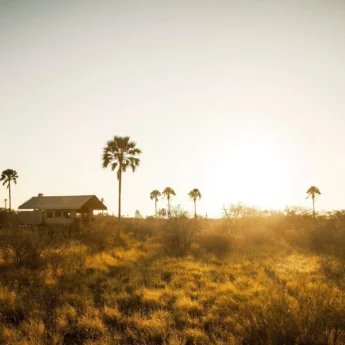
The Pans are a collection of huge salt pans that make up the northern reaches of the Kalahari Desert. They’re some of the largest salt pans on the planet and one of the last remaining homes of the San Bushmen. The most famous pans are the Makgadikgadi, consisting primarily of the vast Sua and Ntwetwe pans. Makgadikgadi is a truly unique destination that can be visited at any time of year, with guests exploring the unique lunar landscape and spending time with the San Bushmen. Over the last few years, the meerkat community here has also received much publicity. Nearby Nxai Pan is a wet-season reserve that’s superb from December through to May, but one that has little game viewing on offer throughout the dry season.
Top things to do in the Makgadikgadi Pans include day and night game driving, as well as walking safaris. Fly camping trips, horse riding and quad biking are also available from certain camps while cultural excursions with the local San Bushmen and meeting the habituated meerkats are two more popular experiences.
The Pans Trips

Activities & Wildlife
This vast, ancient lake bed is a stunning contrast to the Okavango Delta, offering a surreal landscape, a zebra migration, meerkats, and the legendary black-maned Kalahari lions.
Seasonal variations and wildlife
Quad biking and kubu Island
Visit the meerkats
Game drives and walking safaris
Cultural excursions
Fly camping on the Pans
-
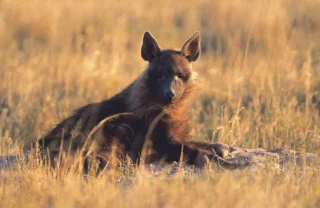
The vast white salt flats of Makgadikgadi are among the largest pans on earth – so large they can be seen from space. Arid and desolate in the dry season (May to October), the pans come to life with the arrival of the rainy season between November and April. Endless white salt flats turn to fertile green plains with shallow lakes. This incredible change of habitat is so inviting that it annually draws in thousands of zebra and flamingos. This slightly unpredictable migration of zebra is the second largest in Africa, with numbers at around fifty thousand. Their presence does not go unnoticed, attracting cheetah, hyena, and the famous black-maned Kalahari lion. Other animals that live on the flats include jackal, bat-eared fox, impala, kudu, and oryx… as well as meerkats!
It’s important to note that you cannot go onto the salt flats during the wet season.

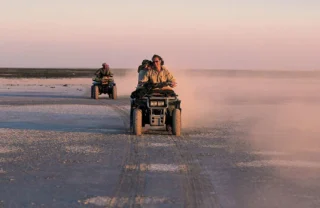
Even for those who would not normally opt for a quad bike, this is an excellent way to get around the salt flats in the dry season. The totally flat pan makes for safe, reliable terrain and you can travel good distances – it’s genuinely thrilling riding across 1,600 square kilometres of ancient lakebed. When you stop, the total silence of the place is phenomenal. No trees, no birds, just the light desert breeze and shimmering white heat as far as the eye can see. It is possible to do longer trips to Kubu Island, a granite rock in the pan with baobabs growing from it. This national monument is sacred to the indigenous people of the region.
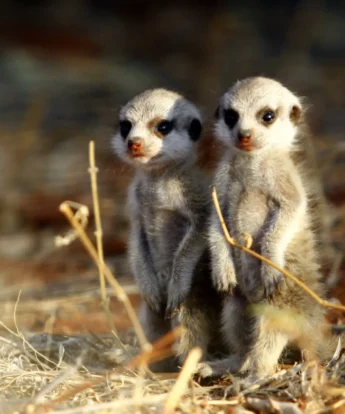
The meerkats in Makgadikgadi are semi-habituated, meaning they are still wild but unafraid of humans. This brings their naturally inquisitive nature to the fore when you go and see them. Meerkats are highly social, live in clans called ‘mobs’, and communicate with each other through a series of chirping sounds. They often position sentinels to warn of any approaching threats, like eagles or jackals. They spend their days foraging and digging in the soil, feeding on spiders, insects, and small vertebrates. If you’re in Makgadikgadi, you should certainly go and see them. They are just as entertaining as their reputation!
These change dramatically depending on the season. The Makgadikgadi Pans is such a special place, people become intoxicated by its desolate charm no matter when they visit!
In the wet season (November to April), migratory herds of zebra and wildebeest arrive, with hungry predators like lion, hyena, and cheetah following their movements. The region around the Boteti River is a particularly good spot for seeing this wildlife phenomenon. Flamingos appear and feed on algae in the shallow lakes, alongside pelicans and geese. The dry season (May to October) sees the departure of the big herds and only the desert-adapted species, along with stragglers such as wildebeest bulls, remain. Springbok, oryx, and red hartebeest are the main prey for cheetah, lion, jackals, and hyena. Dry season is the time to see the meerkats and impressive birds such as ostriches and vultures.
Many of your guides will be San Bushmen, whose ancestors have lived in Makgadikgadi for generations. They know this land implicitly and navigate by the stars at night. During excursions to local villages, you’ll have the chance to learn more about their day-to-day lives, as authentically and respectfully as possible. You’ll gain fascinating insights into the San culture and their unique and longstanding relationship with the Makgadikgadi’s beautiful, but unforgiving, ecosystem.
The night sky in the desert is completely without light pollution, the same as it has been for millennia. So this is a great place to spend a night out beneath the stars, ‘fly camping’! The experience of a night away from your main camp differs slightly from lodge to lodge, but the essential elements are the same. This is a chance to experience Africa at its most inspiring. Going fly camping in the silence of the desert is arguably more special than doing it in a classic safari region.
The Makgadikgadi Pans are a striking contrast to Botswana’s northern waterways, offering a surreal and unworldly landscape. Once a vast super-lake, today the pans are less about big wildlife and more about unique adventures such as meeting habituated meerkats, walking with and learning the ways of the San Bushmen, quad biking across the salt pans, and sleeping under the stars (seasonal). Well worth including in a Botswana safari, in my opinion.Talk to someone who’s been there
Real expertise doesn’t come from a few trips to Africa. All our specialists have either been guides, run the camps, or grown up and lived in Africa. That’s over 600 years of genuine safari experience.Good to Know
01.What is the Makgadikgadi migration?
The Makgadikgadi migration is the second-largest migration of African ungulates. This consists of an estimated 30,000 animals, the majority being zebra, making the 35km round trip from the Boteti River to the Makgadikgadi salt pans in northeastern Botswana. The migration arrives in the Makgadikgadi Pans as soon as the rains begin, when thousands of Burchell’s zebra and blue wildebeest make their way there to feed on the sweet summer grasses and take advantage of the high mineral content found in the salt pans. We would advise the first two weeks of March as the best chance to see the largest herds. This is because, provided the rains have not been really poor, the majority of the migration will still be in the area and the roads will have begun to dry out, thus making getting around much easier.
02.How to reach Makgadikgadi Salt Pans?
The huge, flat Makgadikgadi Salt Pans cover an area of several thousand square kilometers and are located in the northeastern part of the Kalahari Desert, within the national park in Botswana that bears their name. They are all that remains of a huge inland super-lake that existed thousands of years ago but slowly evaporated over time, leaving the pristine, salty-white landscapes of today. You can access the plains by charter flight and by 4×4 road transfer.
03.Are the pans good for big game viewing?
If you are traveling to Botswana to view big game, the pans are not for you – the Okavango, Linyanti and Chobe are much livelier regions. The only exception to this rule is the wet season, from December through to early May, when the herds really do bring the area to life. The zebra migration during the early part of the year is a truly beautiful sight- see the Makgadikgadi Migration below.
04.Should I combine my trip with other areas in Botswana?
You really have to think about why you are visiting the pans. The camps and the activities they offer are very different to each other. Overall, the pans work very well as a contrast to the wet, lush areas that house Botswana’s best game. We recommend that clients try to visit the area if they intend to spend over a week in the country and visit at least two regions; however, speaking to a knowledgeable consultant and discussing the benefits of the different times of year is incredibly important.
05.When is the best time to travel to The Pans?
From January through to May, the pans are full of life as the migratory herds pass through. At this time of year, the pans are definitely worth visiting for game viewing alone. However, the remainder of the year, from June through to November, sees a dramatic exodus of all game and any areas away from the Boteti River should not be viewed as a big game destination. It is at this time of year however, that the pans are arguably at their most magical and the huge expanse of nothingness is easiest to explore. Quad biking at this time is a great way to explore the pans, and an activity you cannot do throughout the beginning of the year.
Speak to an Expert
Let one of our Yellow Zebra specialists design
your tailor‑made African adventureAs Seen In