Lewa–Borana Landscape Safaris
This part of Kenya is well worth visiting! An exciting variety of activities is available, showcasing the area’s wealth of wildlife.
When to go to Lewa-Borana Landscape
Best Time to Go
The largest rhino sanctuary in Kenya
An array of safari & community activities
Home to the Big Five
Great range of accommodation options
Kenya’s Largest Rhino Sanctuary
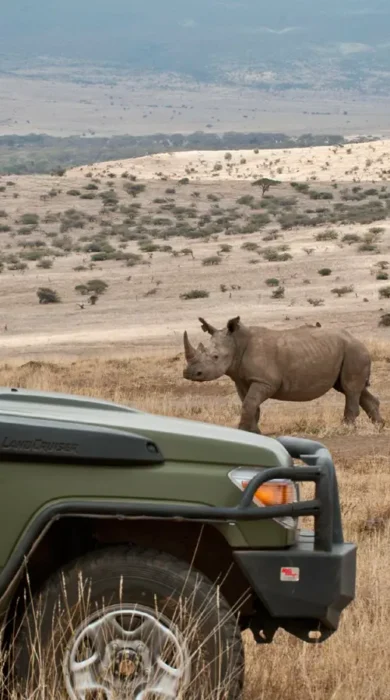
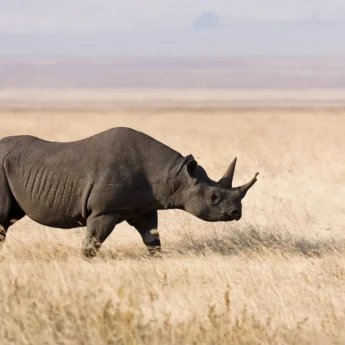
The Lewa–Borana region made headlines in 2014, with the decision to remove the fence that had formed a boundary between the Lewa and Borana wildlife conservancies. The resulting area is the largest rhino sanctuary in Kenya, a must-visit for rhino fans! Initially known as the Lewa–Borana Wildlife Conservancy, it’s now termed the Lewa–Borana Landscape. Guests can enjoy conservation activities involving the hefty herbivores, as well as heading out on traditional big game safaris via guided game drives and walks.
The Lewa–Borana Landscape is situated in Central Kenya, specifically within Laikipia County. To Laikipia’s south-west lies the famous Great Rift Valley, while Mount Kenya stands majestically to the county’s south-east. Lewa–Borana covers almost 38,000 square kilometers of plains, woodlands, and wetlands.
Lewa-Borana Landscape Trips

Activities & Wildlife
A premier location for horse-riding and camel safaris, the rolling hills of Lewa-Borana are home to a wealth of wildlife and the finest selection of activities in Kenya.
The Big Five & other wildlife
Birdlife
Expertly guided game drives
Walking safaris
Horse safaris
Camel safaris
Cultural experiences
Conservation activities
-
The diverse ecosystems located within these private conservancies (now linked together because they sit side-by-side without a border), are home to the Big Five and numerous rare species. Situated on the Laikipia Plateau on the northern slopes of Mount Kenya, it’s a stunningly beautiful area. The terrain is a mix of open plains, acacia forests, and rolling hills. There are excellent predator numbers, with lion, leopard, cheetah, and wild dog. It’s also home to the largest population of wild rhinos in the world.
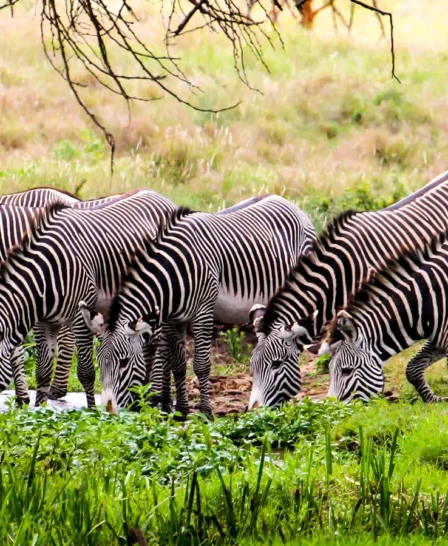
Conservation programmes within the region have been very successful for the rhino, and another animal that has benefited from conservation efforts is the Grevy’s zebra. Tall, with rounded ears and a slimmer stripe pattern than plains zebra, there are around 300 individuals grazing on the plains here.

Lewa-Borana’s birdlife is very impressive as well. There are various different habitats for the birds to nest in – and with over 350 species in the conservancy, this really is a birder’s paradise. They include grebes, pelicans, cormorants, herons and egrets, storks, ibises and spoonbills, flamingo, ducks and geese, lots of raptors, quails and francolins, guineafowls, rails, bustards, stilts and avocets, plovers, sandpipers, doves and pigeons. Certainly a list worth packing your binoculars for!
The green season is technically the best time for birding, so if you’re an avid birder then enjoy low-season rates to see your favorites. The wet season is also the best time of year for photography, as the green foliage produces a better backdrop to your pictures.
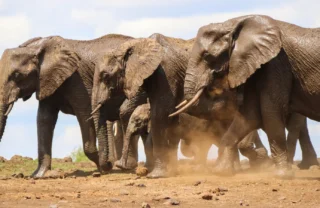
Classic game drives are of course possible in Lewa-Borana, but we definitely recommend interspersing them with the fantastic variety of ways you can experience this park. Drives take place during early morning, and then late afternoon into evening. The safari vehicles can cover a lot of ground, making for plenty of sightings of the region’s wildlife. As well as rhino, big game highlights include lion, leopard, elephant, and buffalo – that’s all the Big Five!
Other predators to watch out for are cheetah and wild dog. Lewa-Borana is also home to a group described as the ‘Northern Five’ – Grevy’s zebra, reticulated giraffe, Somali ostrich, Beisa oryx, and gerenuk. These are fun to find while you’re out on a vehicle and walking safari.
Head out into the bush with an experienced guide on foot, and you will learn so much more about your surroundings. The little creatures that often get missed from a vehicle suddenly come to the fore. Your guide will teach you all about plants, insects, dung, and some basic tracking. Walking safaris can be as long as you want them to be. They often take place in the early morning, when the day is coolest. However, it’s possible to arrange a late afternoon outing and arrive at a particular spot for sundowners in a stunning location. There is great flexibility with activities in Lewa-Borana, and you decide the evening before what you’d like to do the next day.
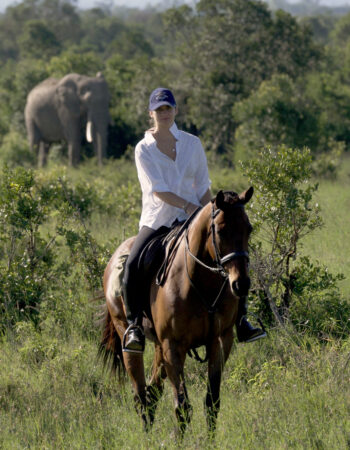
Kenya is the home of the horse-riding safari, and this is arguably the best place to do it. Various lodges have amazing stables that can cater to all levels of ability. The terrain in Lewa-Borana, with its gently undulating slopes, is a stunning setting. Getting a fresh perspective on safari can be a glorious thing, and being in the saddle opens up new possibilities. You’ll be able to get in amongst the plains herds, for some thrillingly close encounters.
The reason for this, and one of the real highlights of being with horses, is that the wildlife views them as part of the landscape. African wildlife is less skittish around them. From a 4×4 you can only get so close, but from the saddle it’s like having a backstage pass.
Walking alongside camels and Maasai guides brings you even closer to nature. This offers a slower pace of safari, learning about the ecosystem from a new perspective. Animals like the Grevy’s zebra, ostriches, and giraffes will feel more comfortable (and be much more approachable) when you are in the company of camels. For anyone a little nervous about walking safaris, the camel provides the perfect companion!
You can ride the camels too, for shorter scenic trips of 1–2 hours. These can occur in the morning or afternoon, often ending in a beautiful location for sundowners. For the adventurous, it is possible to arrange multi-day camel treks. If you are interested in this, please chat to your Kenya expert.
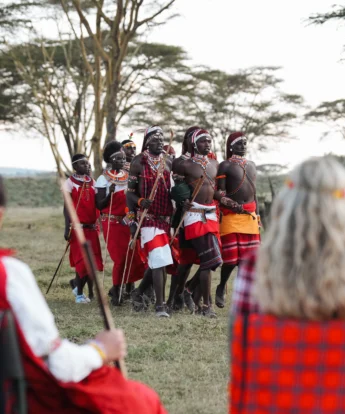
Spend a morning or afternoon visiting a local community and learning about their way of life. Trips to a local school are possible here, and the kids will be very happy to see you! The Maasai culture has been unchanged for many generations, and their fascinating history is one we always recommend you take time to learn about. You can see at first hand how crafts are made, join in with the tribal dances, and meet the people who call this beautiful land their home. The villages are often located on the borders of the park, so chat to your guide about how best to incorporate this into a safari day.
This region is at the forefront of conservation operations in Kenya. The Lewa-Borana merger, and removal of the border between the two areas, was performed partly to give the rhino an enormous swathe of land from which to rehabilitate its population. This successful project has seen a steady rise in the species’ numbers.
There are plenty of opportunities to go behind the scenes in Lewa-Borana and participate in some of the region’s commendable conservation work. You could observe a tracker dog demonstration, learn about security operations, visit the elephant underpass, or take part in a health outreach programme. If you’d like to engage with the conservation efforts, it is often good to book in advance.
History
Lewa Wildlife Conservancy was established in 1983. At that time, it was known as the Ngare Sergoi Rhino Sanctuary. Come June 2013, Lewa became a UNESCO World Heritage Site, in recognition of its outstanding natural beauty and its importance as a wildlife habitat. The Borana region is relatively new to rhino conservation, as the former settler farm welcomed its founding population of 21 individuals in August 2014. With the merging of Lewa and Borana, an immense rhino sanctuary has been formed.
Lewa–Borana is the perfect complement to the Mara. Here, adventurous activities are the focus – walking safaris, horse riding, rhino tracking, and camel treks (to name a few!) offer a new perspective on the wildlife. Many of the lodges are family-run, making this landscape as much about people as it is about the safari itself.Talk to someone who’s been there
Real expertise doesn’t come from a few trips to Africa. All our specialists have either been guides, run the camps, or grown up and lived in Africa. That’s over 600 years of genuine safari experience.Good to Know
01.Why is the Lewa-Borana Landscape worth visiting?
If you’re looking for the perfect balance of fantastic wildlife and a diverse range of activities, the Lewa–Borana Landscape is the ideal spot and home to one of Kenya’s most successful conservation stories! This landscape offers some of the best lodge-based riding safaris in Kenya and it’s an area that has something for everyone, appealing to all ages.
02.What conservation initiatives take place in the Lewa-Borana Landscape?
And every year at the end of June, the landscape sets the stage for the Safaricom Marathon, an event that raises funds for the ever-important conservation initiatives involved in saving Kenya’s wildlife. It’s a great opportunity for anyone seeking a physical challenge alongside a superb safari!
03.When is the best time to travel to Lewa-Borana Landscape?
The best months to visit Lewa–Borana are July to October during Kenya’s dry season, when animals gather around scare water sources. January to March is a good period to visit, as is June. November and December witness the early rains, while April and May see the main rains. Visiting during wet weather can be risky – wildlife is dispersed and more difficult to spot in fully grown grasses. Some properties also close in November. However, the rains do result in beautifully lush scenery!
Speak to an Expert
Let one of our Yellow Zebra specialists design
your tailor‑made African adventureAs Seen In