
Khwai Safaris
Khwai is a village in the north-west district of Botswana, situated on the Khwai river’s north bank. The Khwai River marks the northernmost boundary of the famous Moremi Game Reserve, which boasts some seriously big game!
When to go to Khwai
Best Time to Go
A community concession
Game viewing is easy & plentiful

Close to the Okavango Delta & Moremi Game Reserve
Camps & lodges offering insights into village life

Experience the Khwai Concession
The Khwai concession itself contains plenty of sights to thrill both the new and the seasoned safarist. This is a community concession, owned by the Khwai people. Money raised from tourism goes directly to the Khwai community. Presently, the village population includes roughly 400 Babukakhwe, the River Bushmen, who are related to the San people. The village is located a short distance from the reserve’s north gate. This is in the eastern region of the Okavango Delta, which is also overflowing with wildlife!
Activities & Wildlife
Here, you can explore the game-rich Khwai concession or gain insight into local life on authentic cultural excursions.
Day and night game drives
Walking safaris
Mokoro canoes
Cultural visits
-
Khwai has a variety of landscapes to explore, from riverine forests to mopane woodland and expansive, grassy plains that seasonally flood. This area serves as a transitional zone between the wetlands of the Delta and the arid lands to the north. When the floods arrive, extra channels and lagoons appear from the Khwai River. In the dry season (July to September) the animals congregate at the river, and game viewing is particularly good.
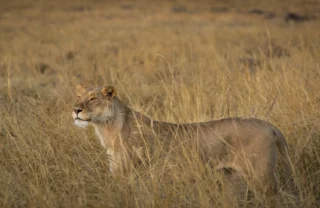
Khwai is renowned for its predators, with leopard, lion, hyena, and wild dog here in good numbers. Plains herbivores include buffalo, zebra, roan, and sable. Red lechwe, elephant, and giraffe are common at the water’s edge, and there are plenty of hippos and crocs. You can do day and night drives as this is a community concession. There are many interesting nocturnal creatures to see at night, including sometimes a big cat with its kill!

Khwai is a ‘community concession’, so unlike in national parks, the safari activities are very flexible. You can walk, drive off-road, and do night safaris. Getting out on foot with an expert guide is always thrilling. There is so much to see and learn that cannot be experienced in a vehicle. You will spot smaller creatures that are often frightened by the sound of an engine, and your guide will demonstrate an encyclopaedic knowledge when it comes to plants, insects, and birdlife. Occasionally, you might track or come across a larger animal. The guides are armed for your protection and specially trained to approach all wildlife.
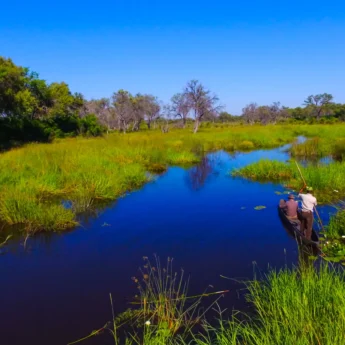
This is the traditional way to get through the waterways that are created by the seasonal flooding of the Delta. Today’s mokoros are usually synthetic for conservation reasons, but they used to be carved out from hardwood trees such as the sausage tree or ebony. You will glide with your ‘poler’ through the smaller channels, often inaccessible by boat. It’s a chance to be more at one with your environment, silently approaching insects, frogs, and birds. The birdlife here is excellent, with crested cranes and the African fish eagle among the hundreds of recorded species. We recommend a mokoro experience at least once to really appreciate the sights and sounds of the waterways!
Khwai village offers a lovely opportunity to meet and interact with the local community. You can see their homes and learn about their history and ways of life in this incredible place. There’s also an interesting balance now between tourism and the more traditional ways. The locals will greet you warmly, sometimes with traditional singing and dancing!
Each visit is slightly different, and you’ll discuss with your guide what you can do in Khwai village, such as visiting the school. There are also many handmade crafts, including intricate woven baskets and beads, which you can purchase directly from the community – basket weaving is one of the primary crafts in Botswana, and the traditional skill is passed down through generations of women. The artisanal baskets make wonderful gifts, and your support for the women’s work is always much appreciated.
History
The timeline concerning the Babukakhwe is quite vague. Archaeological evidence points towards the existence of the San people in Botswana as much as 22,000 years ago, but not much is known about the formation of the Babukakhwe and their movement to Khwai. It is possible that they lived in the area as hunter–gatherers until the 1960s, when the Botswana government persuaded them to settle in villages. When they settled in a part of the Moremi Game Reserve, they were removed.
Talk to someone who’s been there
Real expertise doesn’t come from a few trips to Africa. All our specialists have either been guides, run the camps, or grown up and lived in Africa. That’s over 600 years of genuine safari experience.Speak to an Expert
Let one of our Yellow Zebra specialists design
your tailor‑made African adventureAs Seen In