
Animal Migration in Africa

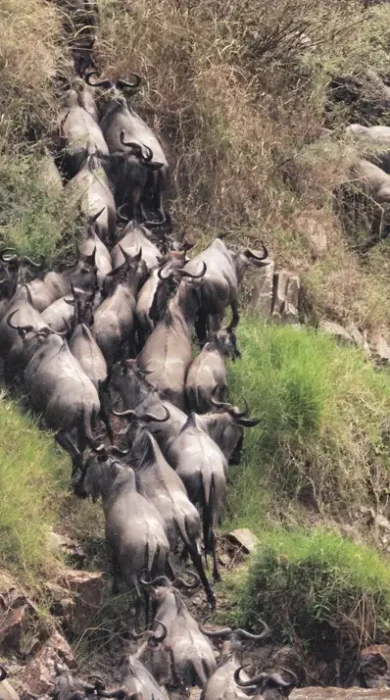
Witnessing a large number of animals move together with a collective purpose is one of the most awe-inspiring sights in nature.
From the famous wildebeest migration in Kenya and Tanzania, to the lesser-known but equally impressive migrations in Zambia, Botswana, and South Africa, we list below a few of these incredible movements that you might like to witness on your next safari.
It’s often breathtaking to see how many individuals can make up a migration and how nature moves with such innate unity.
Africa has many migrations, and some are so beautiful that people travel thousands of kilometers across the globe to catch a sight of them. from the famous wildebeest migration in Kenya and Tanzania, to the lesser-known but equally impressive migrations in Zambia, Botswana, and South Africa. Below, we list a few of these incredible movements that you might like to witness on your next safari.
The Great Wildebeest Migration
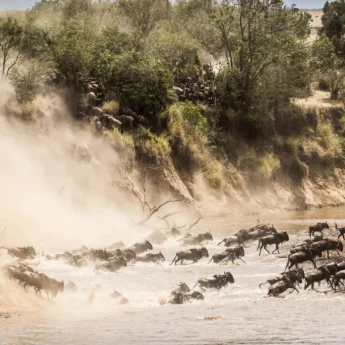
Africa sees several impressive migrations each year, the most famous of these being the Great Wildebeest Migration across the open plains of the Serengeti and the Maasai Mara. It is an annual journey of 800 kilometers, undertaken by over 1.5 million wildebeest and around 200,000 zebra. The herds of the Great Migration follow a similar route every year through the Serengeti and up into the Maasai Mara. The herds cross the Mara River between July and October, creating one of the most filmed wildlife spectacles in the natural world.
Some river crossings can last for more than 3 hours, with over 10,000 animals braving the water. It is difficult to describe how invested onlookers can become while watching such a perilous journey. Another equally rewarding time to see the herds is between January and March, in the southern Serengeti, as this is calving season. The wildebeest give birth in a short period of three to four weeks. This is the arrival of new life into the world on a massive scale!
Did you know, the tracking of the Great Migration actually inspired the Yellow Zebra name? The first researchers to track this migration chose to paint several zebras yellow, so they could be tracked from the air, enabling researchers to follow individual animals on their journey within the massive herds. Today, there are several mobile camps in the Serengeti that follow the path of the migration. These are set up in the best locations, moving every three or four months, and it is not uncommon to see wildebeest wandering through camp. Serian’s mobile camps, Serengeti Safari Camp, Wayo Serengeti Green Camp, and Wilderness Usawa are some of our favorites at Yellow Zebra.
Zebra Migration

Another impressive zebra migration takes place in Botswana. This sees the herds moving from the Chobe river and the Okavango Delta in the dry season to the salt pans of the Kalahari Desert during the rains. Now recognised as the longest land wildlife migration in Africa, it involves the zebras traveling around 1,000 km each year to find fresh grazing and avoid the floods. Our top tips for accommodation are Kings Pool in the Linyanti, for the dry season from June to October, and Jack’s Camp in the Makgadikgadi pans, from January to March.

Bat Migration
The zebra numbers in Botswana are dwarfed by the 10 million fruit bats that make up the annual bat migration in Kasanka National Park in northern Zambia! This takes place between October and December, an aerial migration made all the more spectacular by the fact that these millions of bats all congregate in just a few hectares of forest. The intensity of activity is incredible. While viewing the bat migration is rather niche when it comes to wildlife bucket lists, and may not be to everyone’s taste, our safari specialists can design an itinerary that includes a visit to Kasanka to see them.
Flamingo Migration
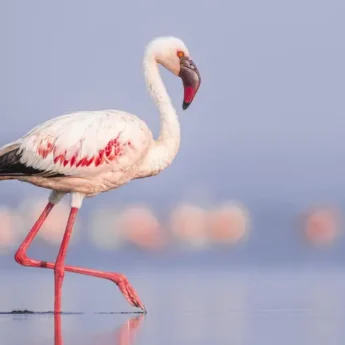
Perhaps the prettiest of the migrations in Africa is the lesser flamingo migration; from April to June they congregate in Lake Bogoria and Lake Nakuru in Kenya. These warm shallow lakes are the perfect breeding ground for these unique birds. Watching the vast flocks of flamingos take flight from the water and fly in huge ‘V’ formations is breathtaking, especially when seen from above. And spending a few days at Loldia House or Deloraine House will allow you to include a trip to the lakes in your safari.

Wildebeest Migration
Following the rains and searching for breeding grounds are often the main motivating factors in mass animal movement. On the Liuwa Plains in western Zambia, the rains and fresh grazing inspire the movement of one of the lesser-known migrations. Approximately 45,000 wildebeest migrate into the park between September and November, joining the park’s resident populations of red lechwe, roan antelope, lion, leopard, wild dog, and others to create a hive of activity. As there are far fewer visitors here than in the Serengeti or the Maasai Mara, you’ll often get to witness this impressive movement without another vehicle in sight: a perfect wilderness experience! King Lewanika Lodge is hidden away in the Liuwa Plains, a safari enthusiast’s dream of a park and an excellent base from which to enjoy a wealth of activities.
Southern Right Whale Migration

For the next migration, we’re leaving land and taking to the high seas. From June to November each year, Hermanus in South Africa sees the migration of southern right whales. They come to this area from their summer feeding grounds in the Antarctic to mate and give birth, as the sheltered bays around the town offer the young calves a greater level of protection. Cliff Lodge De Kelders and Abalone Guest House are two of our team’s preferred accommodation options that are excellently located for whale-watching trips.

The Sardine Run
The Sardine Run in South Africa is a spectacular annual marine event, typically occurring between May and July. Billions of sardines migrate northwards along the country’s eastern coastline, from the cold waters of the Agulhas Bank near Cape Agulhas to the warmer waters of KwaZulu-Natal. Driven by a combination of ocean temperature changes and spawning behavior, this migration attracts a frenzy of predators – including dolphins, sharks, whales, and seabirds – creating one of the ocean’s most dramatic feeding frenzies. The sardines follow a narrow band of cool water close to the shore, making the event visible from both beaches and boats.
This phenomenon has grown in popularity amongst adventure travelers, particularly those brave enough to enter the water and witness first-hand some of the most intense marine wildlife interactions on the planet. Divers and underwater photographers are drawn to the Sardine Run for its unmatched opportunity to capture dramatic scenes of predators, such as sharks, dolphins, and gannets, hunting in coordinated attacks. The unpredictable, fast-paced nature of the run makes it a thrilling challenge, turning the ocean into a live-action spectacle that combines raw nature with adrenaline-fuelled exploration.
Bird Migrations
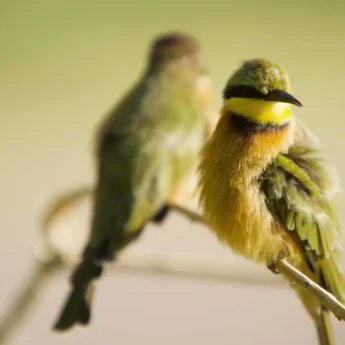
We couldn’t talk about Africa’s incredible wildlife without giving a big shout-out to its amazing birdlife! From colourful local residents to globe-trotting visitors, the skies over Africa are full of surprises.
Some birds are altitudinal migrants, moving up and down between the coastal lowlands and the inland highlands as the seasons change. Others are intra-African migrants, flying from the central, northern, or eastern parts of the continent down to the south. And then there are the Palearctic migrants – these adventurous birds breed in Europe or Asia, but escape the chilly Northern Hemisphere winters by vacationing in Africa!
Learning about bird migration is like getting a backstage pass to nature’s grand design. It shows us just how connected everything is – from rocks and plants to insects, mammals, reptiles, and, of course, birds. Passionate guides love bringing this to life on birdwatching safaris, weaving together stories from geology, botany, and entomology to show why every part of the natural world matters – and why it all deserves our protection.
FAQs
Why do wildebeest migrate?
Vast herds of wildebeest migrate from the southern Serengeti in Tanzania to Kenya’s Maasai Mara in their constant search for fresh grasses. In essence, the wildebeest are following the rains. They spend the wet season on the southern plains and the dry season in the northern woodlands of the Serengeti–Maasai Mara ecosystem.
The route and timing of the Great Wildebeest Migration are intricately shaped by the interplay of soils, minerals, vegetation, rainfall, and the wildebeest life cycle. Fertile volcanic soils in the southern Serengeti, enriched with essential minerals such as calcium and potassium, nourish short, nutrient-rich grasses that are crucial for lactating females and newborn calves, making this region the key calving ground from January to March. As seasonal rains begin to taper off in April, the herds move north-west, drawn by fresh pasture sprouting on black cotton and alluvial soils in the western corridor. The ongoing search for water and nutrient-rich forage drives them farther north to the Maasai Mara by July–August, coinciding with the dry season in the Serengeti. There, red loam and alluvial soils support a mix of grasses and shrublands, offering sustenance until the short rains of November signal the return journey south. This continuous movement not only aligns with rainfall patterns and grass regeneration but also ensures the survival of wildebeest through all life stages – calving, suckling, weaning, mating, and maturing – by maintaining access to high-quality forage throughout the year.
How long is the wildebeest migration?
The Great Migration is a cyclical event that takes place all year. Traveling to the right area of the Serengeti in any month will most likely guarantee sightings of the herds. Certain times of year are famous for different behaviors, such as the river crossings or the calving season.
Where do wildebeest migrate from and to?
The wet season (December to May) sees the herds in the southern Serengeti and northern Ngorongoro Conservation Area. This is calving season. May and June are a transitional period as the herds move north up the Serengeti’s western corridor, to their dry-season grazing grounds of the Maasai Mara and northern Serengeti. Next is the dry season (July to October), when the herds are located in the far north of the Serengeti and the Maasai Mara. This is the river-crossing season. Following this, the herds enter a transitional period again (November to early December) as they move back south to the Serengeti’s Ndutu Plains.
Why do zebra and wildebeest migrate together?
Although the Great Migration is made up of 1.5 million wildebeest, it also contains around 300,000 zebra. Zebra and wildebeest have a harmonious relationship because they each eat different parts of the same type of grass. Wildebeest have a good sense of hearing and smell, while zebra have excellent eyesight, so the combination of the two migrating together means they are great at recognising any threat!
Speak to an Expert
Let one of our Yellow Zebra specialists design
your tailor‑made African adventure